

Will the new owner of the Atlantic Club in Atlantic City be able to overcome bureaucratic barriers?
One of the most famous vacant properties in Atlantic City is once again up for sale—the former Atlantic Club casino complex. A New York developer, who spent years trying to revive the site, is stepping back and looking for a buyer. Why did such an ambitious project reach a dead end, and what opportunities are opening up for new investors? This question is of great concern to the entire New Jersey real estate market.
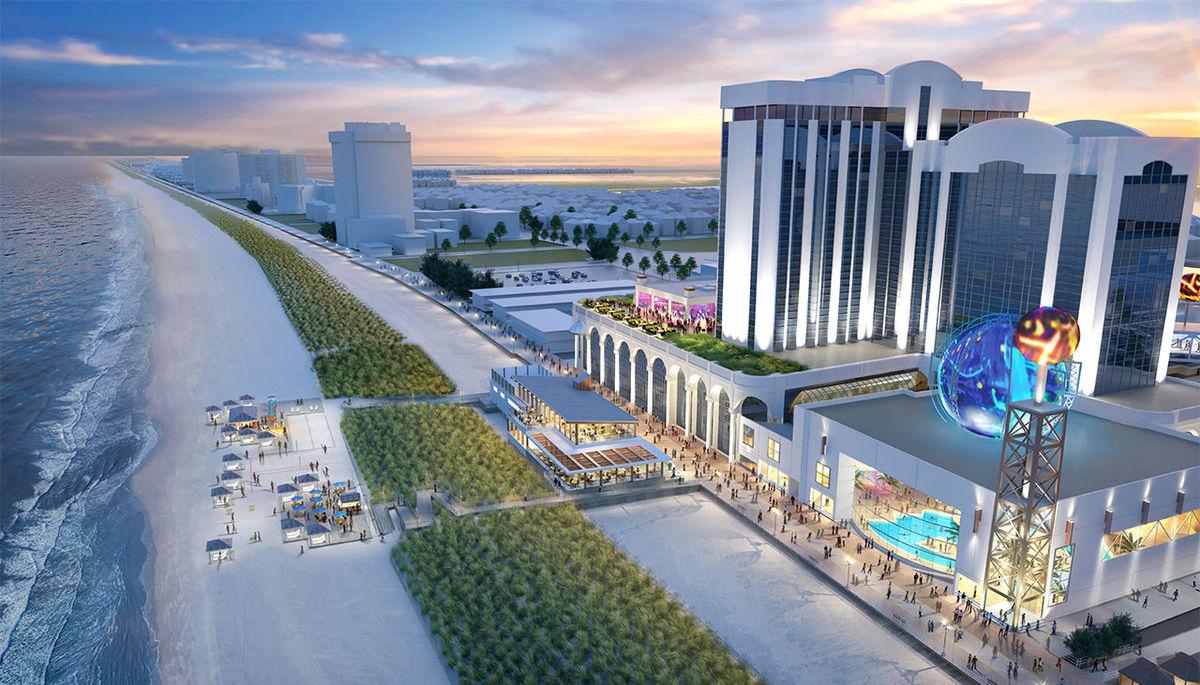
From Gambling Industry Leader to Abandoned Building: The Journey
The Atlantic Club holds a special place in the history of Atlantic City. For decades, the complex was one of the centers of the city's gambling life and attracted thousands of tourists every year. The closure of the casino in 2014 became part of a large-scale industry crisis, when four establishments ceased operations in a single year. The city lost significant tax revenues, and thousands of residents lost their jobs, which had a noticeable impact on the region's economy.
The oceanfront building has stood empty for 11 years, ever since it ceased operating as an 800-room casino hotel. In 2019, Colosseo Development acquired the property for $25 million, according to deal documents. Business Journal quotes Colosseo Development president Rocco Sebastiani: his plan was for a large-scale renovation of the complex and its transformation into a luxury Hilton hotel with apartments. However, reality turned out to be more complicated than any calculations.
Problems with Permits
Any construction or repurposing of a large property in the United States requires a set of permits. These documents confirm that the work complies with building and fire codes, safety standards, and landscaping requirements.
In practice, obtaining such permits becomes a lengthy process, especially when it comes to a property significant to the city. According to Sebastiani, attempts to obtain the necessary paperwork lasted four years but were unsuccessful. Initially, the approval process was at the municipal level, but by February 2024, the process was transferred to the control of the New Jersey Department of Community Affairs (DCA). This agency is responsible for construction oversight and typically intervenes in complex or contentious situations.
Transferring the project to the DCA means that the entire review starts from scratch, approvals are delayed, and the prospects for launching the project become even more uncertain. Sebastiani admits: "It will take a very long time before I get my permits." His words are quoted by Business Journal, emphasizing that the delays threaten the very possibility of implementing the plan.
Reasons for Disagreements and Controversial Issues
Atlantic City spokesperson Andrew Kramer told Business Journal that the reason for transferring the project to DCA control was "Mr. Sebastiani's ongoing failure to comply with New Jersey state building codes." City officials claim that violations of the law became the main stumbling block for the project.
Sebastiani himself disagrees and insists that the company acted strictly according to the law, and all allegations of violations are not supported by facts. He reserves the right to challenge such statements. As of publication, the DCA declined to provide comments on the substance of the dispute, leaving a significant portion of the information unreliable or not fully verified.
In such situations, as real estate market experts note, the parties often assess the reasons for delays and permit difficulties differently. Sometimes it is a matter of legal nuances, sometimes of shortcomings in project documentation, and sometimes of political motives or conflicts of interest.
Division into Lots and Conditions for Buyers
After four years of unsuccessful attempts to start the renovation, Colosseo Development decided to put the property up for sale. Interestingly, potential buyers can purchase the complex in parts: two towers are offered separately, and possibly the adjacent multi-level parking garage.
The first lot—a 20-story tower with 330 rooms, a lobby, and event space (10,000 sq. ft.)—is priced at $55 million, which is $166,667 per room. The second lot, intended for conversion into 108 apartments, is offered without an official price, which leaves room for negotiation. In addition to the properties for sale, buyers may obtain parking rights.
The presence of a Hilton franchise is of particular importance for the market. A franchise is an agreement that allows a hotel owner to use the name and management standards of a major hotel chain. In this case, Colosseo Development entered into an agreement with Hilton, which theoretically enables the new owner to quickly open a hotel under this brand. This significantly increases the investment appeal of the property, as Hilton is an internationally recognized brand capable of attracting clients and investors.
The listing also states: the property may obtain a casino license within 48 months after the deal is completed, although the seller does not comment on this information. Currently, nine casinos operate in Atlantic City, and an additional license could become a major advantage for the investor.
Prospects and Challenges for New Owners
The Atlantic Club remains one of the most important projects for all of Atlantic City. It is both a chance to bring a landmark building on the oceanfront back to life and a unique opportunity for investors to enter the market with powerful hotel and entertainment infrastructure.
There have already been successful examples of renovating old properties in the city, but each time investors had to deal with lengthy approvals and tough competition from other gambling complexes. The logical question arises: will the new owner be able not only to restore the former glory of the Atlantic Club but also to navigate the maze of bureaucracy without losing sight of the investment horizon?
The potential benefits are obvious: the Hilton brand provides access to a wide audience, the apartments and hotel can generate stable income, and a casino license could bring an additional stream of clients. However, the risks are also high: approval timelines, uncertainty with permits, a high level of competition, and the need for significant investment.
The Atlantic Club is more than just a building: it is a litmus test for the entire investment climate of Atlantic City. Will the new owner succeed in breathing new life into it and being competitive with the nine existing casinos? The answer to this question will show how ready the market is for change and whether it can overcome its own barriers.
This article was prepared with the support of https://melbet-apps.net/