

Buffalo Tower Reopens at Treasure Island in Welch
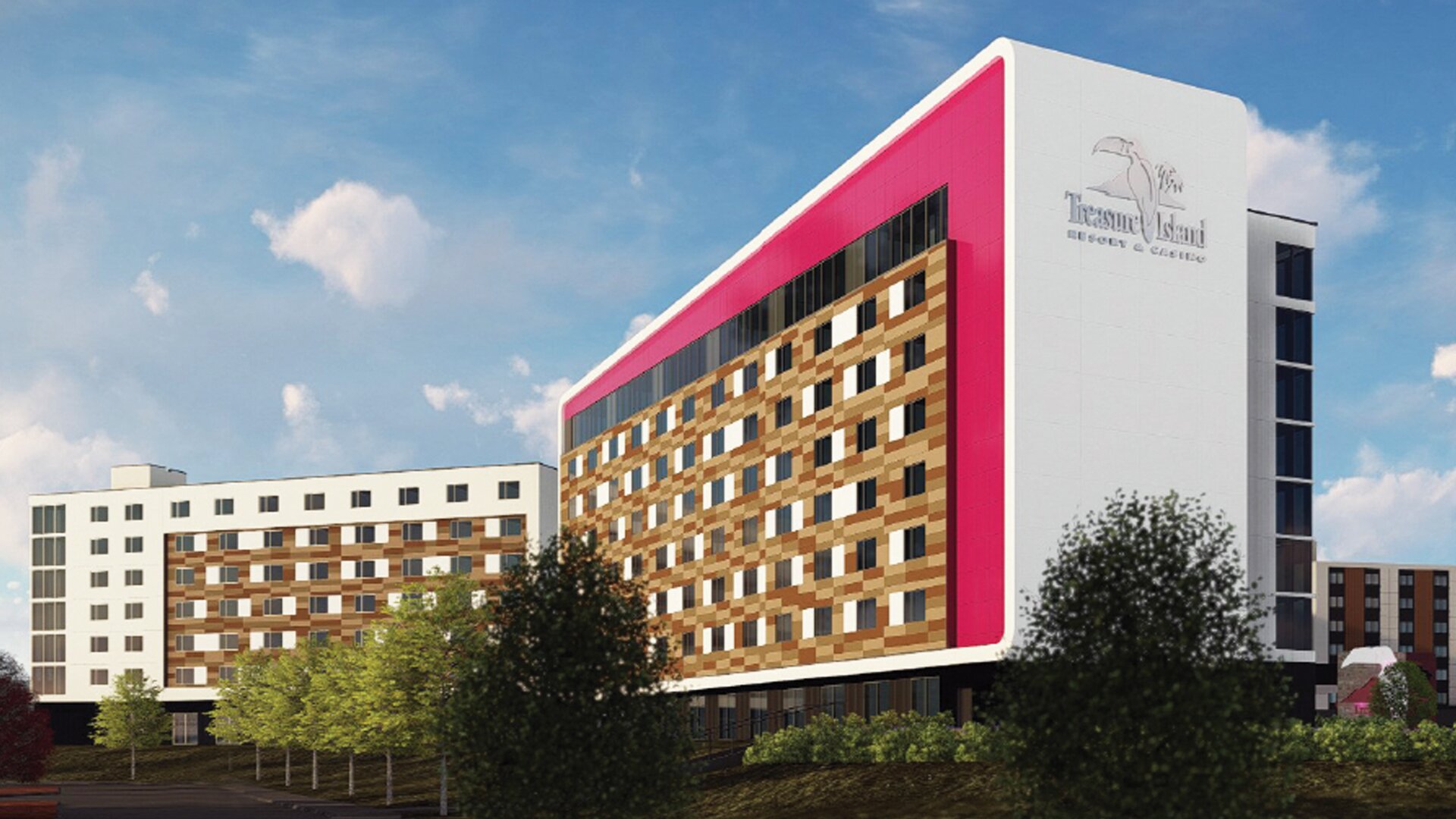
Buffalo Tower at Treasure Island Resort & Casino in Welch, Minnesota, is welcoming guests again after a yearlong renovation. A grand reopening ceremony was held on site Tuesday, marking the tower’s return to the resort’s room inventory.
During the work, Buffalo Tower was fully closed, while Wolf Tower and Eagle Tower continued operating so the resort could continue welcoming guests. The renovation is described as a top-to-bottom, inside-and-out overhaul, and Treasure Island PR manager Aaron Seehusen clarified that the building was essentially gutted floor by floor down to the wall framing and the interior and exterior elements were rebuilt.
Renovating While the Resort Stayed Open
According to Seehusen, all rooms are already available for stays, but the façade still has some remaining tasks from the so-called punch list, i.e., a list of minor finishing items. This stage is typical for major updates, when functionality has already been restored, while exterior details are still being brought to their final look.
Limited information about the budget leaves room for questions about the scale of spending. Treasure Island is not disclosing the project cost, and public comments are limited to wording about a significant investment, comparable to other major projects over the past 10–15 years, which makes direct comparison with the hotel renovation market difficult.
Knutson Construction Returned to the Tower It Built First
The general contractor was Knutson Construction, and there is a near-symbolic full-circle moment in this story. The company built the 246-room Buffalo Tower in the mid-1990s, when it was Treasure Island’s first hotel tower, and has now returned for its complete renewal.
Knutson project executive Chris Lyles said in a statement that the work brought the relationship with the client full circle. He noted that the renovation returns the company to a property where it took part in both the birth and the rebirth of the tower, maintaining a decades-long partnership with Treasure Island and the Prairie Island Indian Community.
RSP Architects and a Design Shaped by Guest Habits
Design was led by RSP Architects, another partner well known to the resort. The firm previously worked with Treasure Island on Wolf Tower, as well as on the 40,000-square-foot indoor water park Lagoon, so the brand’s design language and the site’s operational requirements were not new to them.
The substance of the renovation relied not only on professional design standards, but also on feedback. Treasure Island reported that hundreds of guest comments were taken into account when developing solutions, and this is a rare case in which consumer remarks are described as a direct source of design changes.
New Accommodation Categories and In-Room Amenities
After the renovation, the tower received newly designed accommodation options, from family suites with roll-out beds to executive suites overlooking the casino floor. This range gives the resort more flexibility in pricing and in serving different travel scenarios, from family trips to business travel.
This important change aligns with modern trends, where a casino resort can no longer rely exclusively on guests who came for the casino. Progress in the online segment has reached a level where playing from home is no longer a compromise—it’s a deliberate choice. This is tied not only to overall comfort, but also to the expansion of the gaming assortment. Online casinos have long offered not only the classics, but also crash games, Plinko, and even a reimagined version of the well-known board game, Monopoly Big Baller.
From the authors of a site dedicated to Monopoly Big Baller, which we find here when analyzing search results, we learned important details. They noted that the availability of games with new mechanics has a positive effect on the growth of loyal players, which is reported at around 5–10%. For land-based casinos, this means a steady decline in interest, which is why changes to the room inventory are so relevant.
The changes affected every room, and the list of updates looks like a set of a modern guest’s basic expectations brought together in one project. Among the stated improvements are:
- new windows and new furniture
- a sufficient number of USB ports for charging devices
- adjustable reading lights
- an in-room safe and related upgrades
In the section tied specifically to reviews, the resort lists solutions that often become a subject of debate between aesthetics and practicality. Among them are:
- Luxury Vinyl Plank flooring, which is easier to maintain and harder to damage
- brighter lighting, which helps reinforce a sense of cleanliness and comfort
- larger rain showerheads
- updated bathrooms
Construction, Workforce, and a Tight Timeline
About 400 builders took part in the project, including 10 members of the Prairie Island Indian Community. The involvement of community members in such work is usually seen both as a contribution to employment and as a way to help retain skills and expertise within the community, close to key assets of the tribal economy.
Knutson Construction President Brendan Moore wrote in a letter about the main challenges related to logistics and safety. Crews worked on seven floors in tight spaces, while the resort remained fully operational in areas outside the construction zone, which increased requirements for material routing, noise restrictions, and separating guest and contractor traffic.
Timeline, Resort Scale, and the Broader Investment Context
By Moore’s estimate, a renovation at this level typically takes 18–26 months, but this one was completed in 12. He attributed this to Knutson performing a significant portion of the work in-house, including demolition, general construction, concrete, and installation of FF&E—furniture, fixtures, and equipment—as well as to phased planning. Moore noted that balancing safety, schedule, quality, and the guest experience was not an easy task, and the team met it confidently and precisely.
Buffalo Tower is one of the resort’s three towers along with Wolf and Eagle, and together they provide 788 rooms. Treasure Island emphasizes that by this measure, the property is the second-largest hotel in Minnesota, behind only the 821-room Hilton in downtown Minneapolis, and such competition in scale makes the quality of the room inventory an especially noticeable factor.
Against the backdrop of the renovation, the resort also points to other major investments that have already shaped the territory’s modern look. These include the indoor water park Lagoon, the Treasure Island Amphitheater, and the Wave Spa complex, while the cost of the Buffalo Tower update itself remains undisclosed.
The Community’s Position and a 30-Year Outlook
Tribal Council Chair Grant Johnson of the Prairie Island Indian Community, in a statement, linked the current project to decisions made by tribal leaders in the past. He noted that previous leaders showed remarkable foresight when they planned and built Buffalo Tower more than 30 years ago, and added that it is a privilege to carry that vision forward for future generations, and that the next 30 years, in his words, should bring growth and continued success.
The Buffalo Tower renovation strengthens Treasure Island’s hotel base and supports the resort’s long-term development trajectory, in which the resort’s commercial results are tied to the planning and priorities of the Prairie Island Indian Community.